
By threatening to punish India with high tariff, Trump is actually planting a tantalising thought in the Indian mind that the Modi government should suitably 'incentivise' him, explains Ambassador M K Bhadrakumar.
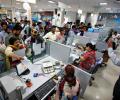
The Union Finance Ministry on Tuesday said that aggregate business of public sector banks (PSBs) has shown strong growth of 11 per cent in the first half of the financial year 2024-25 (H1FY25) to touch Rs 236 trillion. The operating and net profit were also robust. At Rs 1.5 trillion, operating profit grew by 14.4 per cent year-on-year (Y-o-Y) while the net profit saw an impressive 25.6 per cent jump at Rs 85,520 crore in the first half of FY25.

Nineteen per cent of global fund managers remain bullish on India, suggests the latest BofA Asia Fund Manager Survey (FMS). A total of 249 panelists with $656 billion worth of assets under management (AUM) participated in the survey between February 2 and 8, BofA said. Two hundred and nine participants with $568 billion AUM responded to the global FMS questions, while 145 participants with $331 billion in AUM responded to the regional fund manager survey (FMS) questions, BofA said.

United States President Donald Trump has ordered the dismantling of the government-funded news agency Voice of America (VOA), accusing it of promoting biased media reports, as reported by Fox News.
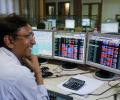
Benchmark Sensex bounced back from early lows and closed higher by nearly 376 points on Monday, snapping its four-day losing run following a rally in blue-chips ICICI Bank, HUL and HDFC Bank. The 30-share BSE Sensex rebounded 375.61 points or 0.46 per cent to settle at 81,559.54. The index opened lower and hit a low of 80,895.05 points in early trade.

From the 30-share Sensex pack, Mahindra & Mahindra, Larsen & Toubro, State Bank of India, Reliance Industries, ICICI Bank and Bajaj Finance were the biggest gainers. JSW Steel and Infosys were the laggards.

Among the 30 Sensex firms, HCL Technologies, NTPC, Bajaj Finserv, Tech Mahindra, JSW Steel, Titan, Mahindra & Mahindra, Tata Steel, Larsen & Toubro and Tata Consultancy Services were the biggest gainers. Kotak Mahindra Bank, IndusInd Bank, Maruti and Hindustan Unilever were among the laggards.

Finance, ICICI Bank, Mahindra &h Mahindra, Kotak Mahindra Bank and Titan were among the gainers. Bharti Airtel, Adani Ports, Tech Mahindra, Reliance Industries, Axis Bank, Larsen & Toubro were the laggards.

As many as 76 per cent of respondents said they will be willing to sacrifice existing benefits for better ones.

Industry experts believe that health insurance companies are unlikely to experience business cannibalisation due to the central government's decision to extend health coverage to people aged 70 and above, regardless of their income level, under the Ayushman Bharat scheme. On Wednesday, the Union Cabinet expanded the Ayushman Bharat Pradhan Mantri Jan Arogya Yojana (AB-PMJAY) to include all senior citizens aged 70 and older. This move is expected to benefit nearly 45 million families, comprising 60 million senior citizens, by providing Rs 5 lakh in free health insurance coverage per family.
Bajaj Finance was the biggest gainer in the Sensex pack, rising 2.70 per cent, followed by Power Grid, IndusInd Bank, NTPC, Bharti Airtel, ITC, Bajaj Finserv, Infosys, Nestle, Tata Steel, Tata Consultancy Services, Titan and Axis Bank. Reliance Industries, Mahindra & Mahindra, Maruti and State Bank of India were among the laggards.

The bank made a Rs 67 crore net profit, up 21% from the previous year. Its deposits grew 8%, the loan book 10%. Net bad loans dropped from 7.53% to 6.07%. So why was the banker, who headed the bank, not promoted?
While TCS cited evolving business needs and future readiness as reasons, industry experts say the action is a cost-cutting measure aimed at improving operating margins that have remained below the firm's aspirational range despite multiple efforts.
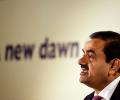
Adani Group's portfolio companies posted their highest-ever pre-tax profit (EBITDA) of about Rs 90,000 crore in the fiscal year ended March 31 and had a cash balance to cover 21 months of debt servicing, the ports-to-energy conglomerate said on Thursday. The Earnings Before Interest, Taxes, Depreciation, and Amortisation (EBITDA) has more than tripled in six years - from Rs 24,870 crore in 2018-19 to Rs 89,806 crore in 2024-25 (April 2024 to March 2025).
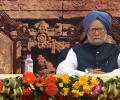
'He will be remembered more for what he did as finance minister -- as someone who functioned well when the political fallout was taken care of.'
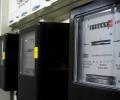
NB-IoT provides cellular-based connectivity with wide coverage and low power consumption, making it ideal for large-scale smart metering deployments.

From Sensex firms, Tech Mahindra, Mahindra & Mahindra, Tata Motors, UltraTech Cement, Tata Consultancy Services, HCL Technologies, ICICI Bank and Tata Steel were the biggest gainers. Sun Pharma emerged as the only laggard.

The share of Ahmedabad in the total value of trades on both the BSE and NSE is set to touch double digits for the third year in a row.

Trading turnover on NSE IX has been witnessing an uptrend and this momentum is likely to continue thanks to the growing global interest in the overall India growth trajectory, MD & CEO of NSE International Clearing Neeraj Kulshrestha has said. Speaking at the Singapore Fintech Festival (SFF) on Monday Kulshrestha said foreign investors are likely to further increase their participation in GIFT City NIFTY.

The Income-Tax (I-T) Department has detected widespread tax evasion involving cryptocurrencies and, according to media reports, has issued emails to thousands of defaulting taxpayers seeking transaction details. Investors must understand the tax rules governing crypto assets and respond promptly to these emails.

Most of the Sensex firms settled in the positive territory. Mahindra & Mahindra, Tata Motors, Tech Mahindra, JSW Steel, State Bank of India, HCL Technologies, Reliance Industries and Infosys were the biggest gainers. Kotak Mahindra Bank and Maruti were the laggards.

Growing at a robust rate due to economic reforms in key sectors like digitisation and infrastructure, India has emerged as a star performer and is projected to contribute more than 16 per cent of the global growth, the International Monetary Fund said on Monday. "What we have been observing for quite some time now is that India has been growing at a very robust rate. "It's one of the star performers when it comes to real growth when you look at peer countries.

The sectors that received most of the investment during this period included manufacturing, financial services, business services, computer services, electricity, and other energy sectors.

Foreign investors pulled out a massive Rs 94,000 crore (around $11.2 billion) from the Indian stock market in October, making it the worst-ever month in terms of outflows, triggered by the elevated valuation of domestic equities and attractive valuations of Chinese stocks. Before this, foreign portfolio investors (FPIs) withdrew Rs 61,973 crore from equities in March 2020. The latest outflow came after a nine-month high investment of Rs 57,724 crore in September 2024.

Geopolitical tensions, trade policy uncertainties, volatility in international commodity prices and financial market uncertainties pose considerable risks to India's economic growth in the coming year, the finance ministry cautioned on Wednesday. "Global trade continues to be affected by uncertainty in the policy environment... tariff-related developments in multiple countries have heightened trade-related risks, affecting investment and trade flows globally.


Investors' wealth plummeted by Rs 4.12 lakh crore during the morning trade on Friday as markets faced a massive correction tracking a weak trend in global peers and fresh foreign fund outflows. Falling for the third day running, the 30-share BSE Sensex tanked 896.7 points or 1.09 per cent to 81,304.46 during the morning trade.

From the 30 Sensex firms, Mahindra & Mahindra, State Bank of India, Bharti Airtel, Hindustan Unilever, Kotak Mahindra Bank, UltraTech Cement, Adani Ports, and Tata Steel were the biggest gainers. ICICI Bank, IndusInd Bank, Asian Paints, Tech Mahindra, Infosys, HCL Technologies, Tata Consultancy Services, and Larsen & Toubro were among the laggards.

The value of private equity (PE)-backed mergers and acquisitions (M&As) in India reached a six-year low during the first seven months of the current calendar year, amid ongoing global uncertainties. The total value of these deals stood at $6.2 billion during the period, down from $9 billion in the same period last year, and lower than the $14 billion recorded during the corresponding period in 2019, according to data from LSEG Deals Intelligence. PE funds pool capital from investors, including high-net-worth individuals, to invest in high-return opportunities.

Inflation data and global trends would be the major driving factors for the equity markets this week which after a record-breaking run took a breather in recent trades, analysts said. The overall market sentiment remains positive, supported by improving economic data and earnings but higher valuations can trigger bouts of profit booking, they said further. During the last week, which the 30-share BSE benchmark rose by 175.12 points or 0.30 per cent.

Macroeconomic data announcements, the last batch of Q1 earnings and global trends are the major factors that would influence trading sentiments in the equity market in a holiday-shortened week ahead, analysts said. Besides, trading activity of foreign investors would also be a crucial factor in dictating movement in the market. Equity markets would remain closed on Thursday for Independence Day.

The US Fed interest rate decision, ongoing quarterly earnings, macroeconomic data and FII trading activity are the major triggers that will drive stock markets this week, analysts said. Investors would also track global market trends and the movement in global oil prices for further cues. "This week, the focus will shift to global cues, particularly the US markets," Santosh Meena, Head of Research, Swastika Investmart Ltd said.

From the 30-share pack, Hindustan Unilever, Tata Motors, Axis Bank, Nestle India, Asian Paints, ITC, Reliance Industries, Mahindra & Mahindra, IndusInd Bank and State Bank of India were among the laggards. Larsen & Toubro, Tata Steel, JSW Steel, HDFC Bank, Adani Ports, Kotak Mahindra Bank, Bharti Airtel and PowerGrid were among the gainers.

Benchmark Sensex rose by nearly 91 points to close at a fresh lifetime high while Nifty settled above the 25,400 level for the first time supported by firm global trends ahead of the much-awaited US Fed's decision on interest rates. Extending its record-setting spree for the second day, the 30-share BSE Sensex climbed 90.88 points or 0.11 per cent to settle at a lifetime high of 83,079.66. During the day, it rose by 163.63 points or 0.19 per cent to 83,152.41.

NTPC was the biggest gainer on the Sensex chart, rising 2.44 per cent, followed by JSW Steel, Larsen & Toubro, ICICI Bank, Axis Bank, Nestle, Mahindra & Mahindra and Tata Steel. Bajaj Finance declined over 3 per cent. Hindustan Unilever, Bajaj Finserv, Adani Port and Asian Paints were the other laggards.

In a double-dose bid to boost growth and employment prospects, the Union Cabinet on Tuesday approved a Rs 2.07 trillion outlay for a research development and innovation (RDI) Scheme to fund private sector innovations, and an employment-linked incentive (ELI) to create over 35 million new jobs over the next two years.

The last batch of quarterly earnings, global trends and trading activity of foreign investors will guide the equity market movement in a holiday-shortened week ahead, analysts said. Volatility may continue amid investors' cautious approach in the election season. Markets will remain closed on Monday due to the fifth phase of the Lok Sabha elections in Mumbai.
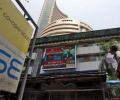
The BSE benchmark Sensex climbed 326.84 points on Monday, tracking gains in global equity markets and buying in index majors ICICI Bank and Hindustan Unilever. The 30-share BSE index gained 326.84 points or 0.62 per cent to settle at 53,234.77. During the day, it jumped 394.06 points or 0.74 per cent to 53,301.99. The NSE Nifty went higher by 83.30 points or 0.53 per cent to close at 15,835.35.

Deductions missed in Form 16 can still be claimed while filing ITR.

Besides wrong selection of ITR form, many professionals claim deductions they are ineligible for.
